
Morocco Culture and Religion: A Complete Guide to Traditions, Islam & Daily Life
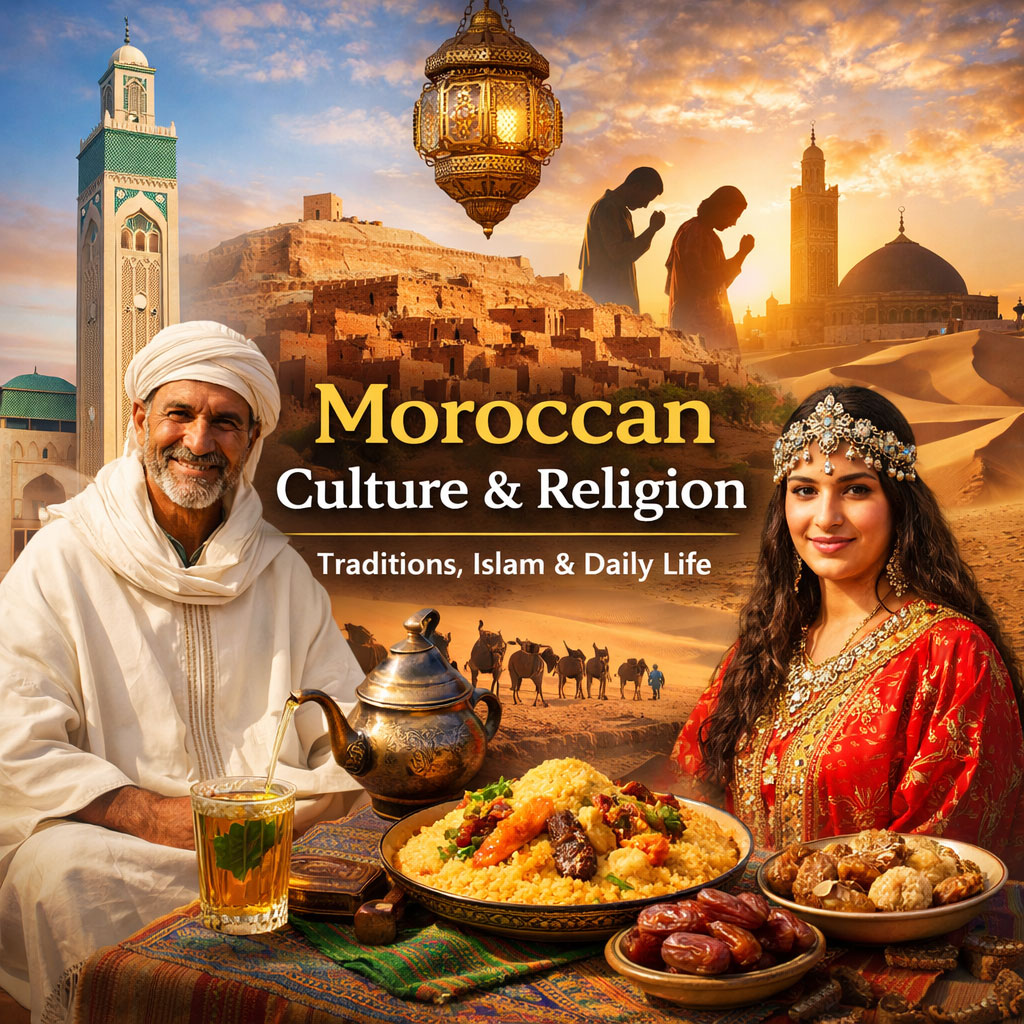
Morocco is not just a destination — it is a living mosaic of faith, tradition, color, and centuries-old heritage. From the echo of the call to prayer at sunrise to the warmth of mint tea shared in a family home, Moroccan culture and religion shape every aspect of daily life.
For travelers seeking more than landscapes, understanding the culture of Morocco transforms a simple trip into a meaningful journey. Whether you wander through imperial cities, explore Berber villages in the Atlas Mountains, or sleep under Saharan stars, cultural awareness deepens every experience.
At Sahara Magic, we believe that discovering Morocco means connecting with its people, beliefs, and traditions — not just visiting its landmarks.
Table of Contents
The Foundations of Moroccan Culture
Religion in Morocco: The Role of Islam in Daily Life
Moroccan Traditions and Social Customs
Moroccan Festivals and Religious Celebrations
Moroccan Architecture and Spiritual Design
Moroccan Food Culture and Religious Influence
Berber (Amazigh) Culture and Indigenous Identity
How to Respect Moroccan Culture as a Traveler
FAQs About Moroccan Culture and Religion
Conclusion
The Foundations of Moroccan Culture
The culture of Morocco is a rich blend of Arab, Amazigh (Berber), African, Andalusian, and Mediterranean influences.
A Crossroads of Civilizations
Morocco’s geographic position between Europe and Africa made it a meeting point of empires and trade routes. Phoenicians, Romans, Arab dynasties, and Andalusian refugees all left lasting imprints.
Today, Morocco’s identity reflects:
Indigenous Amazigh heritage
Arab-Islamic traditions
African rhythms and artistry
Andalusian architecture and music
This cultural layering gives Morocco its distinct personality — vibrant yet spiritual, traditional yet dynamic.
Travelers who choose to explore our complete Morocco itineraries quickly discover that each region tells a different cultural story.
Religion in Morocco: The Role of Islam in Daily Life
What Religion Is Practiced in Morocco?
Islam is the official religion, and the vast majority of Moroccans follow Sunni Islam of the Maliki school.
Religion in Morocco is not only spiritual — it shapes daily routines, architecture, food, clothing, and social values.
The Call to Prayer
Five times a day, the adhan (call to prayer) echoes from mosques across cities and villages. Even for visitors, this sound becomes part of the emotional rhythm of Morocco.
Ramadan in Morocco
During Ramadan:
Fasting occurs from dawn to sunset
Evenings come alive with family gatherings
Special foods like harira soup and chebakia sweets are prepared
Traveling during Ramadan offers unique cultural insight, especially on immersive journeys like the 7-Day Morocco Itinerary from Casablanca to Marrakech , where visitors experience both spiritual and social traditions.
Religious Tolerance
Morocco has a long history of Jewish and Christian communities. Synagogues still stand in cities like Fes and Marrakech, reflecting a legacy of coexistence.
Moroccan Traditions and Social Customs
Moroccan customs are deeply rooted in hospitality and family values.
Hospitality as a Cultural Pillar
Guests are considered a blessing. It is common to be offered mint tea — refusing politely is acceptable, but accepting is appreciated.
Family and Social Structure
Family is central to Moroccan lifestyle. Respect for elders and strong kinship bonds are highly valued.
Traditional Clothing
Djellaba: A long hooded robe worn daily
Kaftan: Elegant garment worn at celebrations
Hijab: Worn by many women, but not mandatory for tourists
Etiquette Tips
Use your right hand when eating
Dress modestly in rural areas
Ask before photographing people
On culturally immersive routes like the 8 Days Morocco Itinerary from Casablanca to Marrakech , travelers engage directly with local families and traditions.
Moroccan Festivals and Religious Celebrations
Festivals in Morocco reflect both Islamic faith and regional culture.
Eid al-Fitr
Marks the end of Ramadan with prayers, new clothing, and family meals.
Eid al-Adha
Known as the Festival of Sacrifice, emphasizing charity and devotion.
Mawlid
Celebrates the birth of the Prophet Muhammad.
Cultural Festivals
Fes Festival of World Sacred Music
Marrakech Popular Arts Festival
Amazigh New Year (Yennayer)
These celebrations offer deeper understanding for travelers on longer cultural journeys like the 10 Days Tour from Casablanca .
Moroccan Architecture and Spiritual Design
Moroccan architecture reflects Islamic art and Andalusian elegance.
Key Features
Geometric zellige tilework
Intricate carved plaster
Riads centered around peaceful courtyards
Majestic mosques with towering minarets
Hassan II Mosque stands as one of the most iconic examples of Moroccan Islamic architecture, combining spirituality and craftsmanship.
Architecture is not only decorative — it symbolizes harmony, geometry, and divine order.
Moroccan Food Culture and Religious Influence
Moroccan food culture is inseparable from religion and tradition.
Halal Dietary Laws
All food must be halal, meaning it complies with Islamic guidelines.
Couscous Fridays
Friday is a sacred day in Islam. Families traditionally gather to share couscous after midday prayer.
Mint Tea Ritual
Mint tea symbolizes friendship and hospitality. It is poured from height to create foam — a gesture of respect.
Ramadan Specialties
Harira soup
Dates and milk
Sweet pastries
During desert experiences like the 4 Days Tour from Fes to Marrakech , travelers share traditional meals with Amazigh families under the Sahara sky.
Berber (Amazigh) Culture and Indigenous Identity
Long before Arab influence, Morocco was home to Amazigh communities.
Language and Identity
Amazigh languages are officially recognized in Morocco today.
Atlas and Sahara Life
In the Atlas Mountains and Sahara Desert, traditional lifestyles remain strong:
Nomadic heritage
Handwoven carpets
Tribal music
Silver jewelry craftsmanship
Exploring routes like the One Week Morocco Itinerary from Tangier to Marrakech reveals the diversity between northern coastal culture and southern desert traditions.
How to Respect Moroccan Culture as a Traveler
Understanding etiquette enhances your experience.
Dress Code
Modest clothing recommended
Shoulders and knees covered in rural areas
Swimwear only at beaches and pools
Mosque Visits
Most mosques are not open to non-Muslims, except notable landmarks like Hassan II Mosque in Casablanca.
Photography
Always ask permission before photographing people, especially in villages.
Ramadan Travel Tips
Avoid eating in public during fasting hours
Expect adjusted business hours
Respect leads to authentic connections — something we emphasize in all Sahara Magic tours.
FAQs About Moroccan Culture and Religion
What religion is practiced in Morocco?
Islam is the official religion, with most Moroccans following Sunni Islam of the Maliki school. Small Jewish and Christian communities also exist.
Is Morocco a strict Islamic country?
Morocco is moderate and culturally open. Islamic traditions guide daily life, but tourism and international visitors are welcomed.
Can non-Muslims visit Morocco?
Yes. Morocco is one of the most visited countries in Africa and welcomes travelers of all faiths.
What should tourists wear in Morocco?
Modest clothing is recommended, especially in rural areas. Lightweight, breathable fabrics work best.
How does Islam influence Moroccan culture?
Islam shapes architecture, food, daily prayer schedules, festivals, and social values such as charity and hospitality.
Are mosques open to tourists?
Most mosques are reserved for Muslims, but Hassan II Mosque in Casablanca allows guided visits for non-Muslims.
Conclusion: Discover the Soul of Morocco
Moroccan culture and religion are not separate concepts — they are woven together in daily life, from morning prayers to evening tea rituals.
To truly understand Morocco is to walk its medinas with awareness, share meals with families, and witness traditions passed down for generations.
Whether you choose a week-long cultural immersion or an extended desert adventure, Sahara Magic invites you to explore Morocco beyond the surface — respectfully, authentically, and deeply.
Your journey through Moroccan heritage begins here.