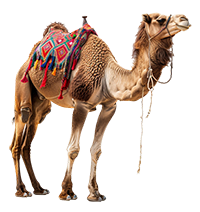
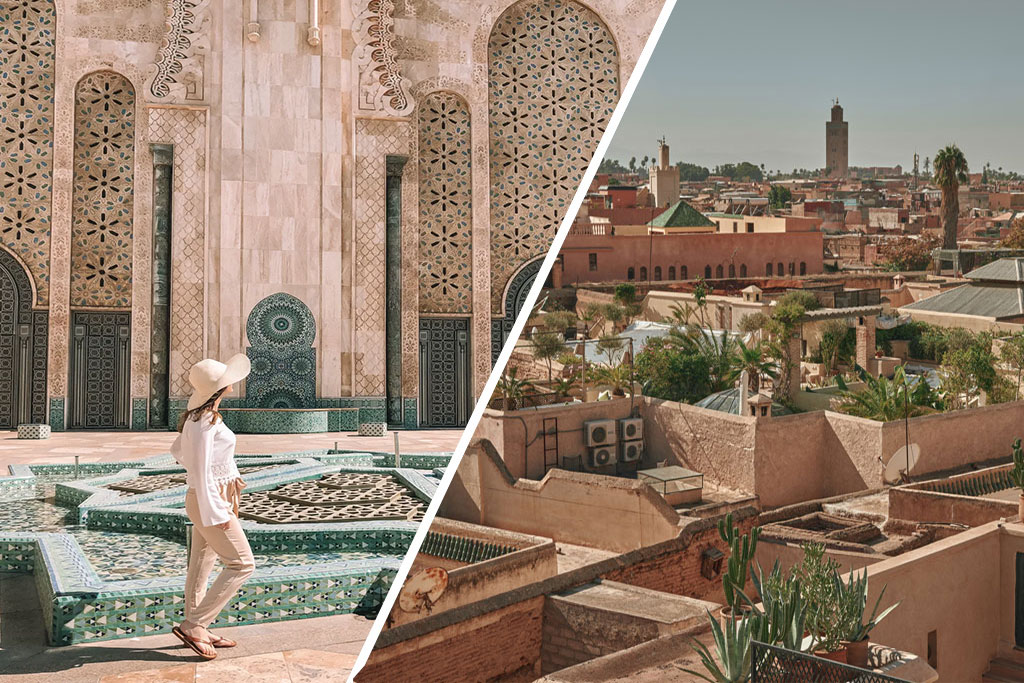
camel trekking

how many days in casablanca

Introduction: How Many Days to Spend in Casablanca?

Are you going to Morocco and wondering how long you should stay in Casablanca? Most people should stay for one to two days, but if you want to relax or explore neighboring places, you may simply add a day. Unlike Marrakech or Fes, Casablanca is largely a business city, not a tourist city. But it offers special things to see that combine the elegance of the old world with the modern life of Morocco.
This full guide will help you decide how long to stay in Casablanca based on your travel style, hobbies, and goals. If you’re only going to be in Morocco’s economic capital for a day or two, or if you’re planning to stay longer, you’ll find the right balance of things to do.

Is Casablanca Worth Visiting?

You might be wondering if Casablanca is even worth visiting in Morocco before you decide how many days to spend there. It depends on what you want. Casablanca is worth visiting if you want to:
  • Experience modern, cosmopolitan Morocco alongside traditional culture
  • Go see the beautiful Hassan II Mosque, which is one of the biggest and most beautiful mosques in the world.
  • Take in views of the Atlantic Ocean from the beautiful Corniche.
  • Explore authentic medinas without overwhelming crowds
  • Try some great seafood and modern Moroccan food.
  • Use the city as a convenient base for day trips
You might skip Casablanca if:
  • You have a very short time to spend in Morocco (less than a week).
  • You only like old medinas and traditional souks.
  • You are mostly interested in desert or mountain scenery.
Most experienced travelers agree that Casablanca gives a different view of Morocco—one that shows the country’s modern goals while still keeping its cultural roots. It’s especially interesting if you like architecture, the beach, or learning about modern Moroccan society.

How Long to Stay in Casablanca: Breaking Down Your Options

How long you should stay in Casablanca depends on a number of things, such as your overall travel plans in Morocco, how fast you want to go, what you want to see and do, and whether you’re treating it as a destination or a stopover.

Quick Overview by Travel Style

Fast-paced travelers (1 day): Visit the Hassan II Mosque, walk along the Corniche, tour a medina, and eat dinner at Rick’s Café. This itinerary provides a concise overview. Balanced explorers (2 days): Add the Habous Quarter, Mohammed V Square, the Royal Palace area, time at the beach, and more in-depth investigation of the region. Most guests find this to be the best place. Leisurely travelers (3 days): Take day trips to Rabat or El Jadida, spend more time in cafés and markets, visit more than one museum, and really get a feel for the local culture. Extended stays (4+ days): Great for people who work from home, have family in the area, or vacationers who use Casablanca as a base to explore the area while enjoying the city’s attractions.

3 Days in Casablanca Itinerary: The Leisurely Exploration

Three days in Casablanca gives you the chance to take it easy and go on a day trip or really look into things that interest you.

Days 1-2: Follow the 2-Day Itinerary

Follow the two-day itinerary above and do all of the important things listed. Spend as much time as you need at each place and add any interesting things you find along the way.

Day 3: Day Trip or Specialized Exploration

Option 1: Day Trip to Rabat

Rabat, the capital of Morocco, is only an hour away by train and is a wonderful place to visit for the day from Casablanca. Refer to the Hassan Tower, the Mausoleum of Mohammed V, the Kasbah of the Udayas, and the beautiful Andalusian Gardens. Rabat is more laid-back than Casablanca and has a lot of important historical sites.

There are many trains that leave from Casa Voyageurs station, and a round-trip ticket costs about 60 to 70 MAD. You should leave by 9 AM and come back by 6 PM for the whole day.

Option 2: Day Trip to El Jadida

For something different, visit El Jadida, a coastal town about 100 km south of Casablanca, famous for its Portuguese fortifications and UNESCO-listed old city. The Portuguese Cistern is particularly atmospheric. Combine history with beach time in this less-visited destination.

You’ll need to hire a car or arrange a private driver for this trip, as train connections are less convenient.

Option 3: Specialized Casablanca Experiences

If you prefer staying in Casablanca, dedicate your third day to specialized interests:

Art and Culture: Visit the Museum of Moroccan Judaism (the only Jewish museum in the Arab world), Sacred Art Museum, or contemporary galleries in the Gauthier district.

Shopping: Explore the Derb Ghallef market for electronics and goods, the Anfa district for upscale shopping, or spend more time in the Habous Quarter for artisan products and traditional crafts.

Cooking Experience: Sign up for a Moroccan cooking class, go on a food tour of local markets, or make a reservation at La Sqala, a restaurant in an old fort with beautiful gardens.

Beach and Relaxation: Spend the whole day at Ain Diab Beach, where you can have lunch at a beach club, or go to the quieter beaches north of the city.

7-Day Itinerary from Casablanca to the Sahara Desert

The most Moroccan adventure is a weeklong trip from Casablanca to the Sahara. It includes imperial cities, mountain scenery, and desert magic.

Day 1: Casablanca Arrival and Exploration

Get to Casablanca and spend the day seeing the best parts of the city. In the morning, go to the Hassan II Mosque, walk through the Old Medina, and have lunch at a local restaurant. In the afternoon, check out the Corniche or Habous Quarter. Stay the night in Casablanca.

Day 2: Casablanca to Fes via Rabat (330 km)

Leave Casablanca in the morning and spend three to four hours in Rabat. Go to the Hassan Tower, the Mausoleum of Mohammed V, and the Kasbah of the Udayas. Continue on to Fes in the afternoon so you can have dinner there. Stay the night in Fes.

Day 3: A Full Day in Fes

Fes el-Bali is one of the largest car-free cities in the world and a UNESCO World Heritage site. Spend a whole day there. Go to the Al-Qarawiyyin Mosque and University, the Chouara Tannery, the Bou Inania Madrasa, and the gates of the Royal Palace. Get lost in the twisting souks and feel like you’re in the Middle Ages. To get the most out of your trip, think about hiring a local guide. Stay the night in Fes.

Day 4: From Fes to Merzouga through Ifrane and Ziz Valley (465 km)

Take one of Morocco’s most beautiful drives. Go through Ifrane, Morocco’s “Little Switzerland,” and the cedar forests of Azrou, where Barbary macaques live. Keep going through the Middle Atlas Mountains and stop for lunch in Midelt. Drive through the beautiful Ziz Valley, which is full of palm trees and kasbahs. Get to Merzouga in the late afternoon. Stay in a hotel near the dunes for the night.

Day 5: Visit to the Merzouga and Erg Chebbi Dunes

Get up early to see the sun rise over the Erg Chebbi dunes. In the morning, you can explore the Merzouga area by visiting a nomad family, going to the Khamlia village known for its Gnawa music, or looking at the fossil sites. Take a camel ride into the Sahara Desert in the late afternoon. It will take about an hour and a half. You can watch the sunset from the dunes, eat a traditional Berber meal, and sleep outside in a desert camp. This is the best part of your trip.

Day 6: Drive 365 km from Merzouga to Ouarzazate through Todra Gorge and Dades Valley.

Get up early to see the sunrise over the desert, then ride a camel back to Merzouga, take a shower, and leave for Ouarzazate. Stop at the stunning Todra Gorge, where the canyon walls rise 300 meters. Take a short hike while you’re there. The Dades Valley, which is called the “Valley of a Thousand Kasbahs,” has beautiful rock formations and traditional fortified villages. Get to Ouarzazate, Morocco’s “Hollywood,” in the evening. Stay the night in Ouarzazate.

Day 7: From Ouarzazate to Marrakech via Ait Benhaddou (190 km)

Go to the Taourirt Kasbah in Ouarzazate, then drive to Ait Benhaddou, a fortified village that is a UNESCO World Heritage Site and has been in many movies, such as “Gladiator” and “Game of Thrones.” Visit this beautiful ksar, then cross the High Atlas Mountains through the amazing Tizi n’Tichka pass (2,260 meters), which has amazing views. Get to Marrakech in the late afternoon. Visit Jemaa el-Fnaa square at night to get a taste of the energy of Marrakech. Spend the night in Marrakech or take a train to Casablanca (3 hours).

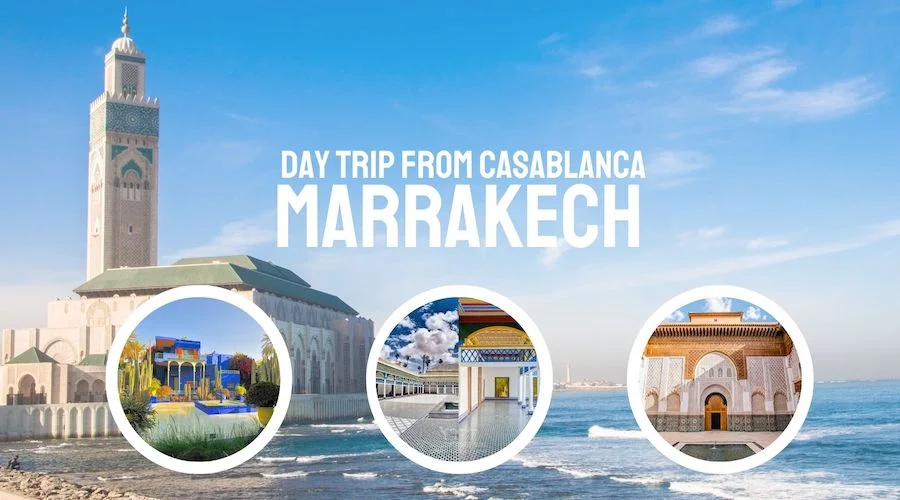
Day-trip-from-Casablanca-to-Marrakech

10-Day Grand Morocco Itinerary: Casablanca to Marrakech via Merzouga

This longer itinerary gives you a full experience of Morocco, letting you spend more time at each stop while still moving at a comfortable pace.

Day 1: Arrive in Casablanca and take a tour of the city

Get to Mohammed V International Airport and then go to your hotel. Spend the afternoon in Casablanca. You can visit the Hassan II Mosque, walk along the Corniche, and eat dinner at Rick’s Café or a local restaurant in Maarif. Spend the night in Casablanca.

Day 2: 340 km from Casablanca to Rabat to Chefchaouen

Visit any sites in Casablanca that you missed on Day 1 in the morning, and then drive to Rabat. Spend two to three hours in Morocco’s capital, where you can see the Hassan Tower, the Royal Mausoleum, and the blue-and-white Kasbah of the Udayas. Keep going north through the Rif Mountains to Chefchaouen, where you will arrive in the evening. Stay the night in Chefchaouen.

Day 3: Exploring Chefchaouen

Spend the whole day in Morocco’s beautiful “Blue Pearl.” Walk around the blue-washed medina, go to the Kasbah Museum and garden, hike to the Spanish Mosque for great views, and buy local crafts like woven blankets and woolen goods. Many travelers love this place because the streets are beautiful and the pace is slow. Spend the night in Chefchaouen.

Day 4: 200 km from Chefchaouen to Fes via Volubilis

Leave Chefchaouen and drive to Volubilis, Morocco’s best-preserved Roman site and a UNESCO World Heritage site. Take 1.5 to 2 hours to look at the mosaics, the capitol, and the basilica. If you have time, stop in Meknes to see Bab Mansour Gate and the Mausoleum of Moulay Ismail. Go on to Fes, where you will arrive in the late afternoon. Fes for the night.

Day 5: A Full Day of Exploring Fes

Spend the whole day exploring Fes el-Bali, the biggest medieval city still in use today. Begin at the Blue Gate (Bab Boujloud), then go to the Al-Qarawiyyin Mosque and University (which was built in 859 AD). Next, visit the Bou Inania Madrasa, which has beautiful carvings, and watch the traditional tanning process at the Chouara Tannery. Finally, explore the endless souks. If you want to learn about the city’s rich history and get around its 9,000+ alleyways, think about hiring a local guide. Have dinner on the roof of a restaurant that looks out over the medina at night. In Fes for the night.

Day 6: From Fes to Merzouga through the Middle Atlas (465 km)

Start your trip to the desert by driving through a variety of landscapes. Visit Ifrane, which has Swiss-style buildings and clean streets, and then go to Azrou to see Barbary apes in the cedar forests. Go down from the Middle Atlas through Midelt (where you’ll stop for lunch) and then through the Ziz Valley, which has dramatic gorges and palm oases. As you get closer to the desert, the landscape changes. Get to Merzouga in the late afternoon. Near the dunes for the night.

Day 7: Visit to the Merzouga Desert

Get up early to see the sun rise over the Erg Chebbi dunes. Spend the morning doing things in the desert, like visiting the empty village of Mifis, meeting nomadic families, looking for Gnawa spiritual music in Khamlia village, or sandboarding on the dunes. After lunch and a break in the hot afternoon, get ready for your camel ride. Leave in the late afternoon, around 5 PM, for a 1.5-hour camel ride into the dunes. Watch the beautiful sunset over the desert, eat a traditional Berber dinner with music around the campfire, and sleep in a nomad tent under millions of stars. This night in the Sahara will stay with me forever.

Day 8: Drive 265 km from Merzouga to Dades Valley through Todra Gorge.

Get up early to see the amazing sunrise over the desert (you’ll want to set an alarm for this!), and then ride a camel back to Merzouga. Leave for the Dades Valley after breakfast and a shower. Stop at the stunning Todra Gorge, where the canyon walls rise 300 meters and make a narrow passage. Walk through the gorge and enjoy the cool shade. Keep going along the “Road of a Thousand Kasbahs,” stopping to take pictures at beautiful spots. Go to Dades Gorge to see the strange rock formations known as “Monkey Fingers.” Spend the night in a traditional guesthouse in the Dades Valley.

Day 9: From Dades Valley to Marrakech, passing through Ouarzazate and Ait Benhaddou (330 km).

Take a drive through the Valley of Roses, which is known for making rose water, to get to Ouarzazate. If you like movies, you can visit the Taourirt Kasbah and the Atlas Film Studios. Go on to the beautiful Ait Benhaddou, which is the most famous ksar in Morocco and a UNESCO World Heritage site. Go to the top for a view of the whole area and look around the old earthen buildings. The Tizi n’Tichka pass, which is 2,260 meters high, is Morocco’s highest major pass. It goes through the beautiful High Atlas Mountains. Arrive in Marrakech in the late afternoon. Check into your riad and then go to Jemaa el-Fnaa square in the evening to see the amazing energy of the food stalls, musicians, storytellers, and snake charmers. Stay the night in Marrakech.

Day 10: All day in Marrakech

Spend your last day in the Red City. Begin at the beautiful Bahia Palace, then go to the Koutoubia Mosque, which is very tall, and the Saadian Tombs. Look for spices, leather goods, lanterns, and carpets in the lively souks. The peaceful Majorelle Garden and Yves Saint Laurent Museum are great places to get some peace and art. You could go to the Jardin Secret in the afternoon or relax in a traditional hammam. As the sun sets, go back to Jemaa el-Fnaa square to see how the square changes. Have one last dinner on the roof with a view of the medina. Marrakech for the night. If you’re flying out of Casablanca, take the train back in the morning (it takes 3 hours) or make arrangements for a private transfer.

Alternative Day 10: Go back from Marrakech to Casablanca

If your flight leaves from Casablanca, spend the morning seeing any Marrakech sights you missed, like Bahia Palace, Majorelle Garden, or the souks. Then, in the afternoon, take the train back to Casablanca (it takes about three hours). This gives you the night in Casablanca to have one last meal or do some last-minute shopping before you leave.
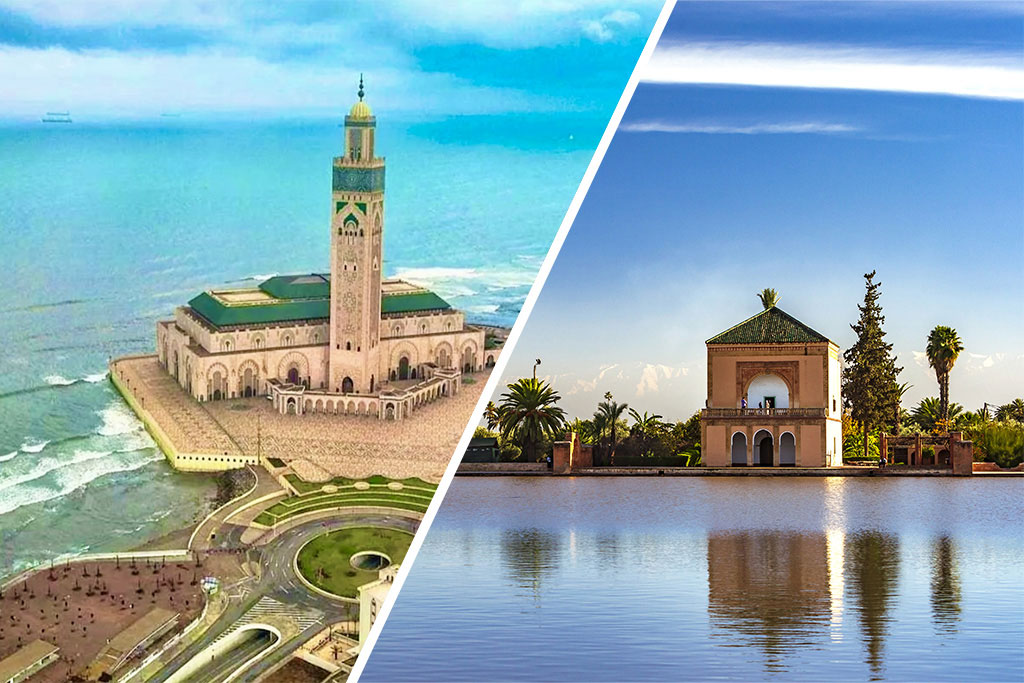
Best-selling Tours from casablanca

Sahara Magic Company offer best packages tours from Casablanca

Things to Do in Casablanca: Beyond the Obvious

We’ve talked about the main sights in the itineraries, but here are some other things to do that might interest you:

People Who Love Architecture

  • Take a self-guided Art Deco walking tour of downtown Casablanca.
  • Go to the Casablanca Cathedral, which is no longer used for worship but is important for architecture.
  • Look for colonial-era villas in residential areas like Anfa.

Food and Culture

  • Go to the Central Market in the early morning to see the fish auction.
  • Visit a traditional hammam (public bath)
  • Street vendors sell Mahjouba, which are Moroccan stuffed crepes.
  • Try a small sardine sandwich with chermoula, a specialty from Casablanca. Not on the Main Road

Off the Beaten Path

  • Check out the Port area and the fish market.
  • Go to Sidi Abderrahman Island (which you can get to when the tide is low).
  • Attend a concert or cultural event at L’Uzine or Théâtre Mohammed V
  • Watch sunset from the Ain Diab lighthouse

Where to Stay in Casablanca: Best Neighborhoods

Choosing the right neighbourhood has a big effect on your time in Casablanca. Here are the best places for different kinds of travellers:

City Center / Downtown (The Best Place for First-Time Visitors)

Near restaurants, major attractions, and public transportation. There are a lot of choices, from cheap hotels to the famous Hyatt Regency. Good for people who want to walk to most places.

Ain Diab / Corniche (Best for People Who Love the Beach)

Hotels and resorts on the beach with views of the ocean. More upscale, with beach clubs, restaurants, and nightlife. You need to take a bus or train to get to attractions in the city center.

Maarif (Best for a modern city experience)

A neighborhood with homes and businesses that has great restaurants, cafés, and stores. A good deal and popular with business travelers. Less touristy, more real.

Gauthier (Best for Small Hotels)

A historic neighborhood with Art Deco buildings, hip places to hang out, and small hotels. It’s easy to walk around and has a European feel.

Close to the Hassan II Mosque (Best for Convenience)

Puts you steps away from the main attraction and makes it easy to get to the Old Medina. There aren’t many hotels, but it’s great for making the most of your sightseeing time. Budget Range:
  • Budget: 200–400 MAD per night (hostels, basic hotels)
  • Mid-range: 500–1,200 MAD per night (comfortable hotels with amenities)
  • Luxury: 1,500+ MAD per night (international chains, beachfront resorts)

Best Time to Visit Casablanca: Weather and Seasons

Understanding Casablanca’s climate helps you decide not just when to visit, but also how long to stay and what activities to prioritize.

Spring (March–May): Ideal Conditions

Temperature: 15–25°C (59–77°F). Pleasant weather perfect for walking tours and outdoor activities. Gardens are blooming, and it’s comfortable for all-day exploration. This is arguably the best time to visit Casablanca.

Summer (June–September): Beach Season

Temperature: 22–30°C (72–86°F). Hot but moderated by Atlantic breezes. Perfect for beach activities along the Corniche. Can be crowded with Moroccan holidaymakers in July–August.

Fall (October–November): Second Best Season

Temperature: 18–26°C (64–79°F). Similar to spring with comfortable temperatures and fewer crowds. Excellent for sightseeing and outdoor dining.

Winter (December–February): Off-Season Value

Temperature: 10–18°C (50–64°F). Cooler and rainier, but rarely very cold. Fewer tourists mean better hotel rates and shorter lines. Practical Tip: Spring and fall offer the best balance of weather, crowds, and prices.

Casablanca vs Marrakech: Which Deserves More Time?

Many travelers face this question when planning their Morocco itinerary. Here’s an honest comparison to help you allocate your days wisely:

Marrakech Generally Deserves More Time (3–4 days minimum)

Marrakech offers denser tourist attractions, a more atmospheric medina, famous palaces and gardens, proximity to the Atlas Mountains, and more varied accommodation options.

Casablanca Complements Rather Than Competes (1–2 days)

Casablanca showcases modern Morocco, features the stunning Hassan II Mosque, offers easier navigation, and provides excellent international connections.

The Ideal Combination

  • Fly into Casablanca: 1–2 days
  • Train to Marrakech: 3–4 days
  • Optional: Fes, Chefchaouen, or Sahara Desert: 3–7 days
  • Return via Casablanca before departure
Bottom Line: Combine both cities for a richer Moroccan experience.

Practical Travel Tips for Casablanca

Transportation

  • Mohammed V International Airport is 30 km from the city center. Airport train takes about 40 minutes.
  • Taxis: Use metered petit taxis for short distances.
  • Trams: Modern system connecting major areas.
  • Trains: ONCF trains are comfortable and reliable.

Money and Costs

  • Currency: Moroccan Dirham (MAD)
  • Budget daily: 500–700 MAD (budget), 800–1,500 MAD (mid-range), 2,000+ MAD (luxury)
  • Cash needed for taxis and small restaurants

Language

  • Arabic and French are primary languages
  • English increasingly spoken in tourist areas

Safety

  • Casablanca is generally safe for tourists
  • Watch belongings in crowded areas

Cultural Considerations

  • Dress modestly, especially when visiting mosques
  • Friday is the holy day
  • Ramadan affects restaurant hours

Conclusion: How Many Days in Casablanca Are Enough?

For most travelers, 2 days in Casablanca is ideal. It allows you to see the highlights while experiencing both modern and traditional sides of the city. One day works if you’re short on time. Three days is perfect for a relaxed pace or day trips. Casablanca reveals its charm gradually. Travelers who explore beyond the main sights often discover a vibrant, cosmopolitan city that represents modern Morocco.

Let’s Start Planning Your Adventure

At Sahara Magic, every journey is tailor-made. Tell us what you’d love to see and do in Morocco, and we’ll create a personalized tour just for you.

    Questions and Answers (FAQ)


    Is one day enough time to see Casablanca?


    You can see the main sights in Casablanca in just one day. These include the Hassan II Mosque, the Old Medina, and the Corniche. But you’ll have to hurry through the city. If you only have one day, make a plan and get up early to make the most of your time. Two days is the best amount of time for a more laid-back trip.
    How many days should I spend in Marrakech

    and how many in Casablanca?


    Most people who travel should spend one to two days in Casablanca and three to four days in Marrakech. Marrakech has more things for tourists to do, a bigger medina, famous palaces and gardens, and usually gives visitors the “quintessential Morocco” experience they are looking for. Casablanca adds to this with its modern view, beautiful Hassan II Mosque, and international vibe.


    When is the best time to go to Casablanca?


    April, May, October, and November are the best months to go to Casablanca. During these months in the spring and fall, the weather will be nice (15–26°C/59–79°F), there will be fewer people than in the summer, and it won’t rain much. The beach is great in the summer (June to September), but it can be crowded with tourists from the area. Winter is less expensive, but it’s also colder and rainier.


    Is it possible to go from Casablanca to Marrakech in one day?


    Yes, but it’s a big goal. The train ride from Casablanca to Marrakech takes three hours. You can take a train in the early morning (around 7 AM), spend 6 to 8 hours exploring Jemaa el-Fnaa, the souks, and one main attraction like Bahia Palace or Majorelle Garden, and then come back in the evening. But this only makes sense if you’ve already spent a lot of time in Marrakech or if you’re in a hurry. You should spend at least two or three full days in Marrakech.


    Should you go to the Hassan II Mosque?


    Yes, without a doubt. The Hassan II Mosque is the best thing about Casablanca and one of the few mosques in Morocco that non-Muslims can go into. The architecture is stunning, with huge chandeliers, intricate tilework, and carved cedar. Its position, which is partly over the Atlantic Ocean, makes for great photo opportunities. Guided tours cost about 120 MAD and happen all day except Friday mornings. This is the one thing you really need to see in Casablanca.


    How do I get from the airport in Casablanca to the city center?


    The airport train is the easiest and cheapest way to get to and from the airport. It runs every hour between Mohammed V International Airport and the Casa-Voyageurs and Casa-Port stations. It costs about 50 MAD and takes 35 to 45 minutes. You could also take a taxi (200–300 MAD) or have your hotel set up a private transfer for you. Use the official taxi stand at the airport instead of getting a ride from an unofficial taxi driver.


    Is it safe for women to travel alone to Casablanca?


    Yes, Casablanca is generally safe for women traveling alone, and it is known as one of Morocco’s more open cities. But take normal safety measures: dress modestly (cover your shoulders and knees), don’t walk alone late at night in isolated areas, and be firm but polite if someone pays you too much attention. Stay in well-known hotels and use official taxis or ride-sharing apps to get around.


    What language do people speak in Casablanca?


    Moroccan Arabic (Darija) and French are the main languages spoken in Casablanca. French is a very useful language for travelers because it is used a lot in business, tourism, and education. More and more people are speaking English in hotels, restaurants, and tourist areas. However, learning some basic French or Arabic phrases will make your trip much better. A lot of younger Moroccans, especially those who work in tourism, can speak some English.


    Is it possible to see both Casablanca and Rabat in one day?


    You can visit both cities in one day, but it will be a long day. It takes only an hour to get from Rabat to Casablanca by train. A typical schedule would be to spend the morning in Casablanca (at the Hassan II Mosque), take a train to Rabat at noon (to see the Hassan Tower, Mausoleum, and Kasbah of the Udayas), and then return to Casablanca in the evening. This is a good option if you don’t have a lot of time but still want to see both the political and economic capitals of Morocco.


    How much money do I need to spend every day in Casablanca?


    Here are some estimates of how much money you’ll need each day in Casablanca:

    Travelers on a budget: 500–700 MAD ($50–70) – hostels, street food, public transportation, and free things to do
    Travelers in the middle range: 800 to 1,500 MAD ($80 to $150) – hotels that are comfortable, meals at restaurants, taxis, and attractions that cost money
    Luxury travelers: 2,000+ MAD ($200+) – high-end hotels, gourmet restaurants, private tours, and top-notch experiences

    These estimates take into account lodging, meals, transportation, and activities. Compared to Western Europe or North America, Morocco is usually not too expensive.


    Is Casablanca better than Marrakech?


    They are not better or worse; they are different. Marrakech has an old medina, palaces, gardens, and is close to the Atlas Mountains. It’s what most people think of when they think of Morocco. Casablanca is a modern city in Morocco with a cosmopolitan vibe, Art Deco buildings, beachfront living, and the beautiful Hassan II Mosque. Most tourists go to both cities to get a full Moroccan experience. They spend more time in Marrakech (3–4 days) than in Casablanca (1–2 days).


    What should I put on in Casablanca?


    Casablanca is Morocco’s most cosmopolitan city, and people there are less strict about how they dress than in the countryside. But people still like it when you dress modestly and respectfully. Women should bring loose-fitting clothes that cover their shoulders and knees, light scarves, comfortable shoes for walking, and swimwear for beach clubs. Men can wear shorts and t-shirts, but they should cover up when they go to mosques or traditional neighbourhoods. At the Hassan II Mosque, both men and women must cover their knees and shoulders. Women do not have to cover their hair.


    Would it be okay for me to drink alcohol in Casablanca?


    Even though Morocco is a Muslim country, you can buy alcohol in Casablanca. You can get alcohol in licensed hotels, bars, fancy restaurants, and some nightclubs, especially in modern areas like the Corniche and Maarif. Carrefour and other supermarkets with special licences sell alcohol in certain areas. However, it is not culturally acceptable to drink alcohol in public on the streets, and you won’t find alcohol in traditional medinas or cafés in your neighbourhood. Respect local customs and drink responsibly at all times.


    How far away is the Sahara Desert from Casablanca?


    It takes about 7 to 8 hours to drive from Casablanca to the Sahara Desert, which is about 560 kilometres (350 miles) away. The Erg Chebbi dunes near Merzouga are in the Sahara Desert. There isn’t a direct route; you usually go through Fes or the Middle Atlas Mountains. Most people who travel from Casablanca to the Sahara spend at least three to four days there or go on organized tours. The trip itself is amazing, going through a wide range of landscapes like mountains, valleys, and the edges of the desert.
    Do I need a tour guide in Casablanca?
    You don’t always need a guide in Casablanca, unlike Fes or Marrakech. The city is easier to get around, less like a maze, and the signs are clearer. A guide, on the other hand, can make your visit to the Hassan II Mosque (which is included in the entrance fee) more enjoyable, give you historical context in the medinas, and help you find hidden gems. If you like to explore on your own, Casablanca is easy to get around with just a good map or navigation app.

    Leave a Reply

    Your email address will not be published. Required fields are marked *